

Two brand-anchored streets exist on opposite sides of the world, each having quietly rewritten the city around it. One moves at the speed of a drop. The other at the pace of a garden. The interesting question is not which is better — it's what happens when they stand next to each other.
Consider the problem of the street. Not as infrastructure — as argument.
Every city has them: corridors that stop being mere connectors and become, instead, propositions. They argue for a way of living. They select who belongs. They edit, with some invisible hand, the rhythm at which you are supposed to move through them. The Champs-Élysées argues for grandeur. The Nakameguro canal argues for quietude and coffee taken seriously. Brick Lane argues, somewhat noisily, for perpetual reinvention.
Seongsu-dong's Musinsa Street, in eastern Seoul, argues for speed. Mattelsa's block in Medellín, Colombia, argues for its opposite.
bcdW has spent considerable time on both. What we have come to believe is this: they are not rivals. They are a conversation that has not yet happened.
MUSINSA Seongsu-dong, Seoul | MATTELSA Medellín, Colombia |
— Korea's most-trafficked street fashion platform — Drop culture, viral energy, digital-first — The street as editorial curation — Speed as both product and philosophy — The city reshaped around the brand | — Colombia's eco-lifestyle fashion label — Slow production, organic materials, artisan-made — The street as philosophical manifesto — Stillness as both product and philosophy — The brand shaped around the city |
The Grammar of a Brand Street
There is a moment in the life of certain brands when the act of occupying a building is no longer sufficient. The brand begins to colonise the surrounding atmosphere. It becomes — through curation, repetition, and the weight of its own mythology — a kind of urban legislation.
Musinsa understood this before most. When Korea's most influential street fashion platform moved its physical presence into Seongsu-dong, it did not merely open a store. It wrote a zoning ordinance in the language of aesthetics. The brands that followed were not random tenants; they were sentences in a paragraph Musinsa was composing. The visitors who came were not merely shoppers; they were readers. And the street itself — preserved industrial bones, deliberate patina — became the paragraph's setting.

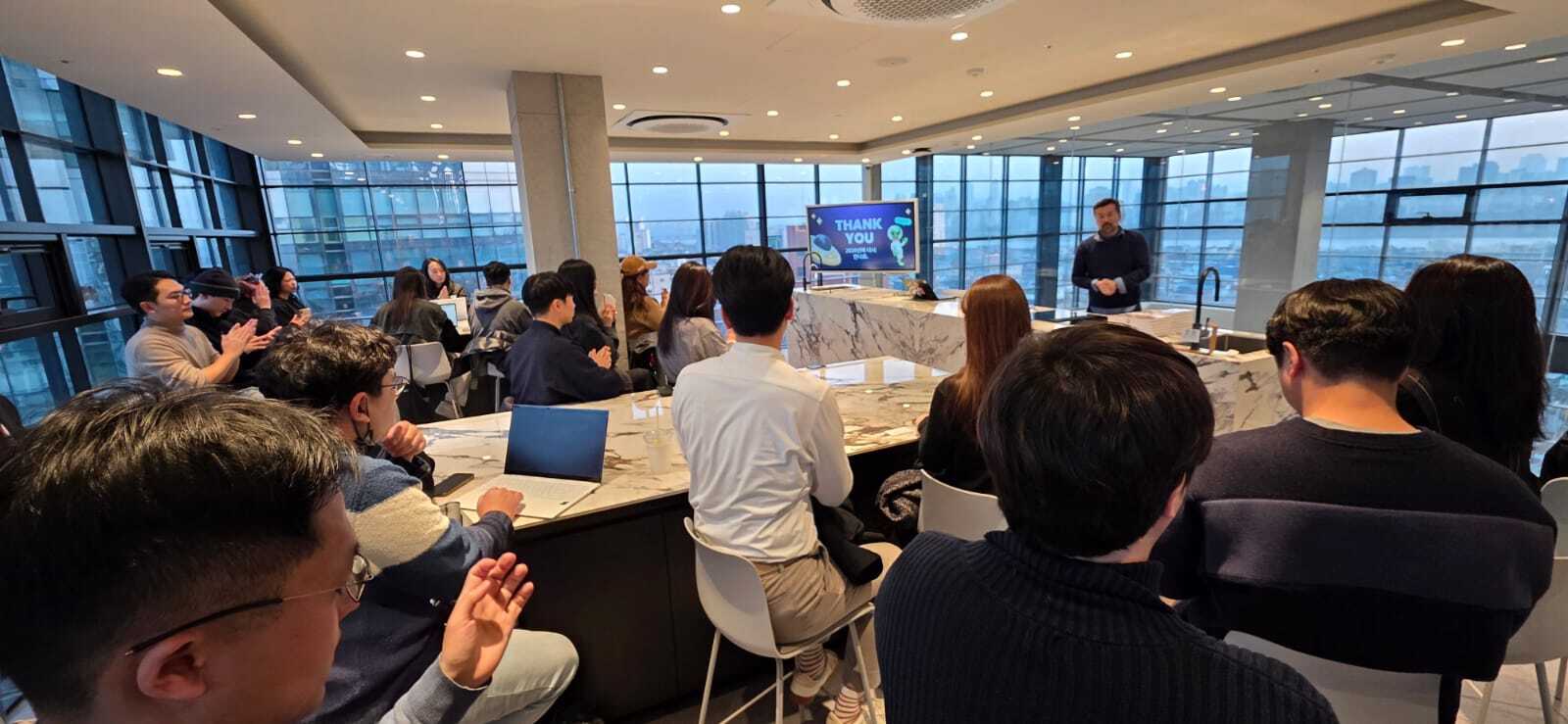
The locations of Musinsa
Mattelsa, in Medellín, performed the same act through entirely opposite means. Where Musinsa legislated through velocity, Mattelsa legislated through deceleration. An herb garden is not a commercial proposition — it is an argument about what deserves space in a city. A café that serves adaptogenic lattes alongside a capsule collection is making a claim about the relationship between what you wear and what you consume and what you choose to slow down for. The street did not happen to Mattelsa. Mattelsa chose the street as its longest-running text.


Both strategies produced the same result: a street that cannot be read without reading the brand, and a brand that cannot be understood without walking the street.
“ The question a brand street asks is not 'what do you want to buy?' It asks: 'what kind of person do you want to be while you're here?' — bcdW Editorial Team |
Experiment One: Mattelsa Street, Seoul
"DIGITAL TO NATURAL"
Seongsu-dong has a problem it has not quite acknowledged. The problem is not its energy — that is its gift. The problem is the absence of anywhere to metabolise it. You arrive, you are stimulated, you acquire, you leave. The street offers no grammar for the space between the dopamine hit and the next one.
The proposal: insert Mattelsa's philosophy into that gap.
One of Seongsu's surviving factory walls. The industrial skeleton kept intact — because the bones are not incidental, they are the aesthetic — while Mattelsa's botanical palette climbs the exterior. Inside, the logic inverts. The pace drops. The materials become audible. You can hear the difference between a shirt made quickly and a shirt made carefully, if the room is quiet enough.
The edit is not a merger of aesthetics. It is a sequencing of them. Musinsa gives the visitor the intensity of the find. Mattelsa gives the visitor somewhere to sit with it. A turmeric shot and an outdoor table in the shadow of a city that never stops — this is what punctuation looks like in urban form.
COLLAB OBJECT What the goods would look like: Musinsa's street-ready silhouettes cut from Mattelsa's organic textiles. The capsule is not styled toward either brand's existing customer — it is styled toward the person each brand's customer privately wants to become. Limited run. No restock. |
Experiment Two: Musinsa Street, Medellín
"K-STREET WAVE"
Medellín has always known how to walk. The city was rebuilt, in part, around the premise that public space is a civic right — that a wide, well-designed pedestrian boulevard is not a luxury but a political statement. The parades that move through Mattelsa's neighbourhood have a quality of unhurriedness that is, in its own way, as sophisticated as anything Seoul produces.
Into this setting, introduce the full vocabulary of Musinsa. A pop-up truck. A large screen running Korean street-dance films. Models in fresh Seoul fits moving through the crowd not as advertisement but as proposition. Mattelsa's botanical café remains exactly where it is — and the juxtaposition does something interesting to both elements.
This is not cultural export in the traditional, extractive sense. It is cultural legibility. Medellín's audience gains a grammar for understanding K-street style — not as distant spectacle but as something that happened in a city that felt, in certain ways, like their own. Seoul gains Colombian organic material, artisan relationships, and the slower logic of a fashion culture that has decided patience is a form of quality.

The K-Colombia Collection, produced using Colombian organic textiles shaped by Musinsa's graphic sensibility, launches here first, in the city where the idea makes most sense, before going global. Both cities get to have made something together. There is a footnote worth keeping. Korea, before the twentieth century standardised its romanisation, was commonly written as Corea — with a C. Which means the K in K-Colombia is, in one sense, a correction. And in another sense, entirely unnecessary. Co-lombia already had Co-rea inside it. The collaboration, it turns out, was always already spelled this way.
THE COLLECTION Colombian organic textile × Musinsa graphic identity. The collab object that makes both cities legible to the other's audience. Medellín-exclusive drop, followed by a global online release through Musinsa's platform. |
What the Exchange Actually Produces
There is a version of this story that is about marketing. Two brands generate buzz by occupying each other's geography. Photographs circulate. A hashtag briefly trends. The pop-up closes. Everyone moves on.
That version is not interesting. The version that interests us at bcdW is slower and more structural.
What the exchange actually produces — if it is done with any seriousness — is a revised set of questions. Korean consumers, having sat in Mattelsa's garden after buying something they did not strictly need, find themselves in possession of a new prompt: what is this thing for, and how long should it last? Medellín's consumers, having navigated a Musinsa drop in their own city, have access to a new question too: what does it feel like to want something this specifically, and what does that desire say about you?
These are not marketing outcomes. They are epistemological ones. And they are exactly the kind of outcome that cities produce when they allow their streets to argue with each other rather than merely coexist.
Seongsu and Medellín are not alike. That is entirely the point. The friction between their propositions — speed and stillness, graphic and organic, platform and garden — is generative in proportion to how seriously each takes the other.
The street next to the street is not a compromise.
It is a question that neither street could ask alone.
“ When the borders between Seongsu and Medellín dissolve, the story that fills that gap — that is what bcdW is here to tell. — bcdW Editorial |
bcdW Magazine covers the cultural and economic corridors between the Americas and Asia. This article is part of our City Pairing series — a sustained editorial project examining what happens at the intersections of cities that have more in common than geography suggests.
Don't you want to know Seongsu better? The full essay continues in the bcdW subscriber report — a deep reading of Seongsu, Medellín, and what it means when two cities decide to swap their streets. Subscriber Report · Concept Deck · 45-min Session bcd-w.xyz · Powered by PaulnJoseph |