

Current Today is bcdW Magazine's daily newsletter — one story, one city, read through the eyes of the world.
We launch today in test flight. Each edition takes a single real story from one of our cities and asks: what does this mean for someone living somewhere else entirely? What ideas travel? What collaborations become possible?
Let’s get into it →
Medellín’s official city brand is “Aquí todo florece” — Here, everything flourishes. It is a perfect slogan. And it almost doesn’t matter.
Every city has a brand. Most cities spend money trying to control what theirs says. Medellín is the rare case of a city whose brand was earned entirely by what it did — not by what it said.
In 1991, Medellín had the highest homicide rate of any city on earth: 381 murders per 100,000 people. Pablo Escobar was alive. The cartels ran the hillside neighborhoods. The city’s global reputation was simple and total: the most dangerous place in the world.
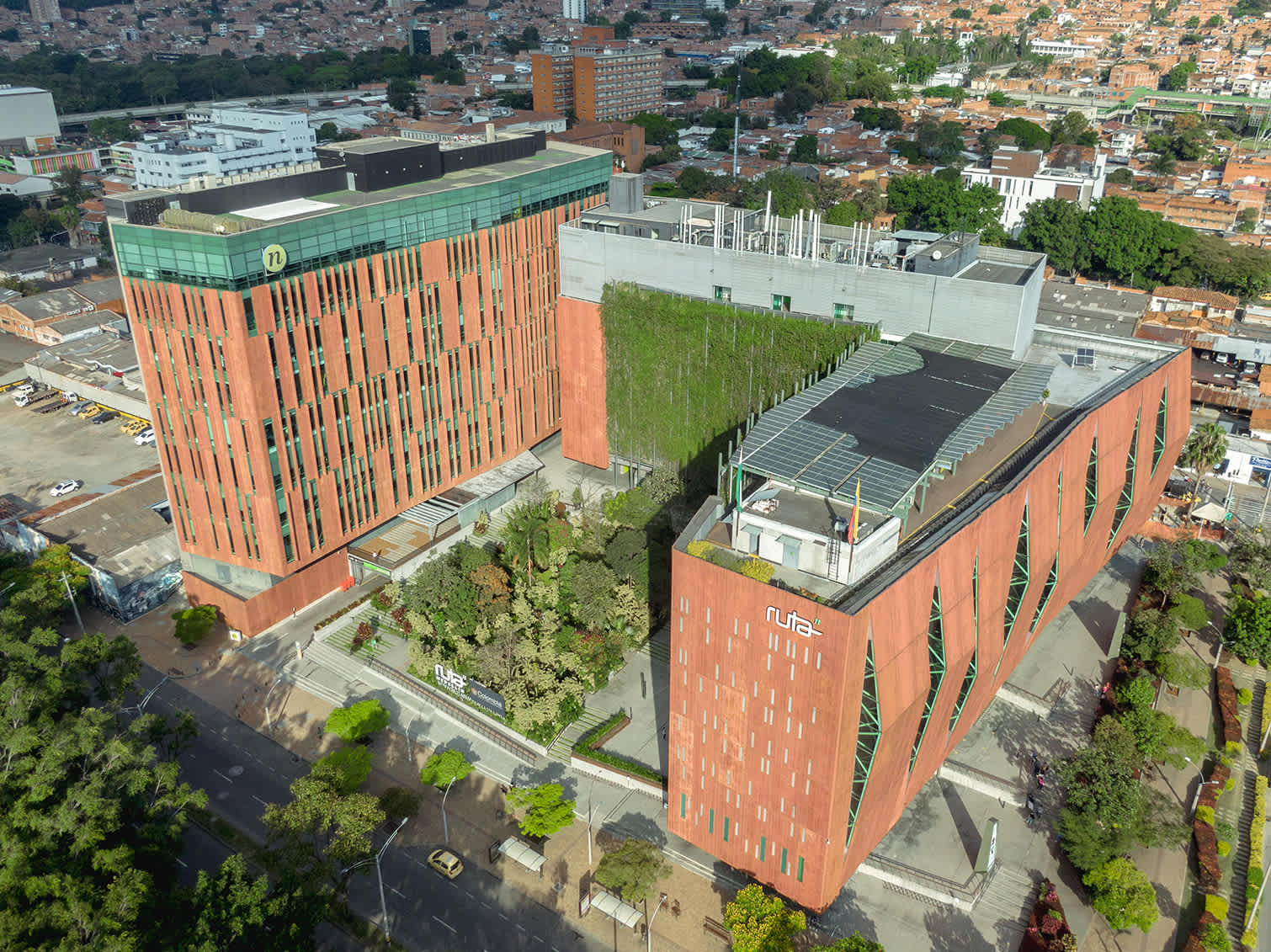
Then came the cable cars. And the escalators in Comuna 13. And the library parks in the poorest neighborhoods. And the Metro connecting hilltop communities to the city center for the first time. The city didn’t announce a rebrand. It built things. Slowly, the things it built became the story people told about it.
By 2013, the Wall Street Journal, Citigroup, and the Urban Land Institute named Medellín the world’s most innovative city. The homicide rate had fallen from 381 to 27. Architects, urban planners, and city officials from 35 countries came to study what happened here. The World Bank ran a “Living Lab” program in the city. The brand had changed completely — and not a single campaign had caused it.
The Marca Medellín was formally redeveloped around 2023 to consolidate this narrative for international investment and tourism promotion. The brand now has five pillars: transformation and resilience, innovation and smart city, fashion and creativity, sustainable urbanism, and cultural growth. Each pillar describes something the city actually built before anyone named it.
“Aquí todo florece” is not a promise. It is a description. The city that once couldn’t grow anything but violence decided, over thirty years, to grow something else instead. The slogan arrived after the fact. That is what makes it true.
The lesson is not that every city should build cable cars. It is that a city’s brand is the sum of its decisions — and the only way to change it is to make different ones.
(Sources: World Economic Forum, Emerald Insight, ArchDaily, World Bank — 2024–2026)
How Other Cities See This — and Who Should Call Them
New York — New York’s city brand is the most powerful and most ambivalent in the world. “The city that never sleeps.” “If you can make it here.” The brand was built over a century of cultural production — films, music, literature, fashion, finance — and it has enormous inertia. But New York’s brand has been under pressure for a decade: rising costs, post-pandemic population loss, the sense that the city’s promise is no longer as accessible as it once was. Mayor Mamdani’s $80 million Future Fund — designed to give immigrant and minority founders access to capital — is a Medellín-style move: not a brand campaign, but a structural decision that, if it works, will be told as a brand story for decades. Cities don’t rebrand by talking. They rebrand by building.
Seoul — Seoul’s city brand has transformed faster than almost any other major city in the world. Twenty years ago, Seoul was invisible to most global audiences. Today it is the origin point of K-pop, K-drama, K-beauty, and K-food — a cultural export machine that has turned the city into a destination, an aesthetic, and an aspiration for hundreds of millions of people who have never been there. Seoul didn’t brand this. It happened because the city invested in creative industries, in public space, in the infrastructure of culture as hard policy. The “365-Day Festival City” declaration this week is Seoul doing consciously what Medellín did instinctively: treating the next phase of the brand as an infrastructure decision, not a communications one.
Austin — Austin’s city brand — “Keep Austin Weird” — was born as a bumper sticker and became the most influential city positioning in America. It attracted creative people, then tech workers, then companies, then capital. The brand preceded the reality and then created it. But Austin is now in the difficult second chapter: the city it became is not the city the brand described, and the people who made the brand are being priced out of it. SXSW’s decentralization this year was, inadvertently, a brand moment — a reminder that Austin is more interesting than any single building in it. The question Austin’s leadership should be asking right now is: what is the infrastructure decision that writes the next chapter of the Austin brand?
Dallas — Dallas has always had a brand problem. Houston has the medical center and NASA. Austin has the weird. San Antonio has the history. Dallas has… the Cowboys. And a lot of corporate headquarters. The FIFA World Cup this summer is the first genuinely global brand moment Dallas has had since the TV show that bore its name. Nine matches. A semifinal. A broadcast center. 2.7 million visitors. If Dallas uses this moment to show the world a city that is more than its skyline — that has neighborhoods, food culture, creative energy, and a story worth telling — it will have done something no marketing budget could buy. If it squanders it, the Cowboys brand will remain larger than the city’s.
Dubai — Dubai’s city brand is the most deliberately engineered of any city on this map. The tallest building. The palm-shaped islands. The indoor ski slope in the desert. Each of these was a brand decision disguised as a real estate or infrastructure decision. The brand worked: Dubai became the destination for global capital, global talent, and global ambition. But the Iran war has done something no brand campaign could have anticipated: it has forced Dubai to discover a different brand asset — resilience. A city that keeps the malls open, closes $3.24 billion in real estate while missiles are in the sky, and asks its entrepreneurs to hustle rather than flee is building a brand that no architectural feat could have created. Adversity is a more powerful brand-builder than spectacle.
Tel Aviv — Tel Aviv’s city brand is “Startup Nation.” It is effective, globally recognized, and deeply constraining. The brand attracts venture capital and technical talent but struggles to project the full complexity of what the city actually is: a Mediterranean beach city with one of the world’s most intense creative and cultural scenes, a deep history, a complicated political context, and a population that is simultaneously one of the most anxious and most alive on earth. Medellín’s experience offers Tel Aviv a different model: the most powerful brands are not slogans. They are stories of what a city chose to do when it faced its hardest problems. Tel Aviv has those stories. The question is whether it chooses to tell them — or keeps retreating to the startup one.
bcdW Magazine



Your Next Opportunity Is Already Happening — Just Not Where You're Looking
The deal, the partner, the market, the project — it's out there. bcdW connects people who are ready to move with the places, people, and ideas that are ready to receive them. Business opportunities, revenue, partnerships, projects worth joining. Read the magazine that finds the connection before you do.
→ Read bcdW Magazine
Sim Eternal City Project
Where Will the Olds Live When Everything Changes? We're All Getting There. Today's Old Is Tomorrow's Ours.


A Letter for the Age of Aging: On the Neighbor Called Robot
March 26, 2026

We are getting older. All of us. Faster than we planned, longer than we expected, in cities that were never designed for this. Climate is changing everything — heat, water, food, safety. And at the same time, the oldest generation in human history is growing larger, living longer, and asking a question no city has fully answered yet: where do we belong in all of this? Sim Eternal is the project building that story — not as a warning, not as a policy paper, but as a living narrative about the future city told by the people who will live in it the longest. The olds are not the problem. They are the point. And this city is theirs.
→ Visit Sim Eternal City Project
Join the Map
Current runs on one city, one story, every day. But the map is still being drawn.
We are looking for contributors who live and work inside the cities they write about — one story from your city, told the way only a local can tell it. We are also looking for readers who want to add their voice to other cities' stories — benchmarking, similar cases, collaboration ideas, a connection worth making. If a story from Medellín reminds you of something happening in your city, tell us. That response is the whole point.
Right now we are building across the Americas and Asia. But the dream is longer than that — from America to Afro-Eurasia, local to local, city to city, one real connection at a time.
More stories. More cities. More continents.
If you have one, send it.
Love Never Fails,
